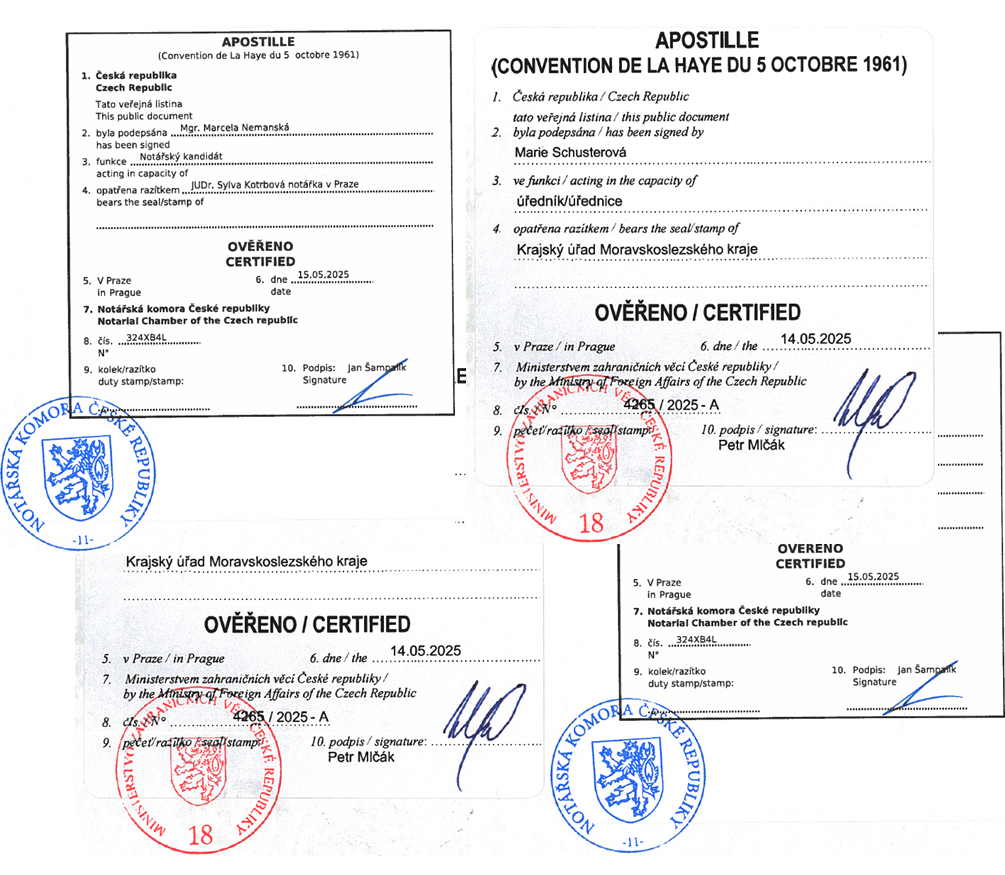
An apostille is a higher level of authentication required when an authenticated document is to be presented in another country that is a party to the Convention Abolishing the Requirement of Legalization for Foreign Public Documents, adopted in The Hague on 5 October 1961. This Convention simplified the process of authenticating public documents intended for use in countries that are its signatories and with which the Czech Republic has not concluded bilateral international agreements providing for an exemption from authentication.
The apostille always indicates the date of issuance and has unlimited validity. However, in practice, it is common for an authority to require an up-to-date version of the translated document – such as a criminal record extract. In such cases, a new apostille must be issued together with the newly obtained document.